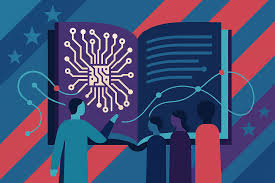
In a major push to prepare students for a rapidly evolving digital world, schools across the country have begun rolling out AI literacy programs, marking a significant shift in education priorities. The initiative, announced on Tuesday, aims to equip students with foundational knowledge of artificial intelligence, machine learning, and responsible technology use.
Education authorities said the programs would be introduced at both middle and high school levels, covering topics from AI concepts and algorithms to ethical considerations and real-world applications. “Our goal is to ensure that students don’t just use technology but understand how it works and how it impacts society,” said a senior official from the Ministry of Education.
The programs include interactive workshops, coding exercises, and project-based learning, designed to make AI concepts accessible and engaging. Several schools have also partnered with technology firms and academic institutions to provide mentorship, hands-on experiences, and access to AI tools.
Experts believe that introducing AI education at an early stage will help students develop critical thinking and problem-solving skills, which are increasingly essential in STEM careers. “AI literacy is no longer optional — it is becoming a core competency for the workforce of tomorrow,” said a leading education technology researcher.
While the initiative has been widely welcomed, educators note challenges in teacher training, resource allocation, and curriculum integration. To address this, the government is launching special teacher-training modules and providing schools with online resources to ensure uniform implementation across urban and rural areas.
Industry leaders have praised the move, highlighting its potential to foster innovation and bridge the skills gap in emerging technologies. Analysts also point out that students with AI literacy are likely to have a competitive edge in higher education and future job markets, particularly in fields such as robotics, data science, and software development.
The launch of these programs comes at a time when governments worldwide are emphasizing digital skills and technology education to maintain competitiveness in a global economy. By integrating AI into school curriculums, educators hope to prepare the next generation not only to adapt to technological change but also to shape it responsibly.
As AI literacy programs begin rolling out nationwide, students, teachers, and parents are optimistic that this step will pave the way for a more digitally empowered generation, ready to thrive in an increasingly AI-driven world.