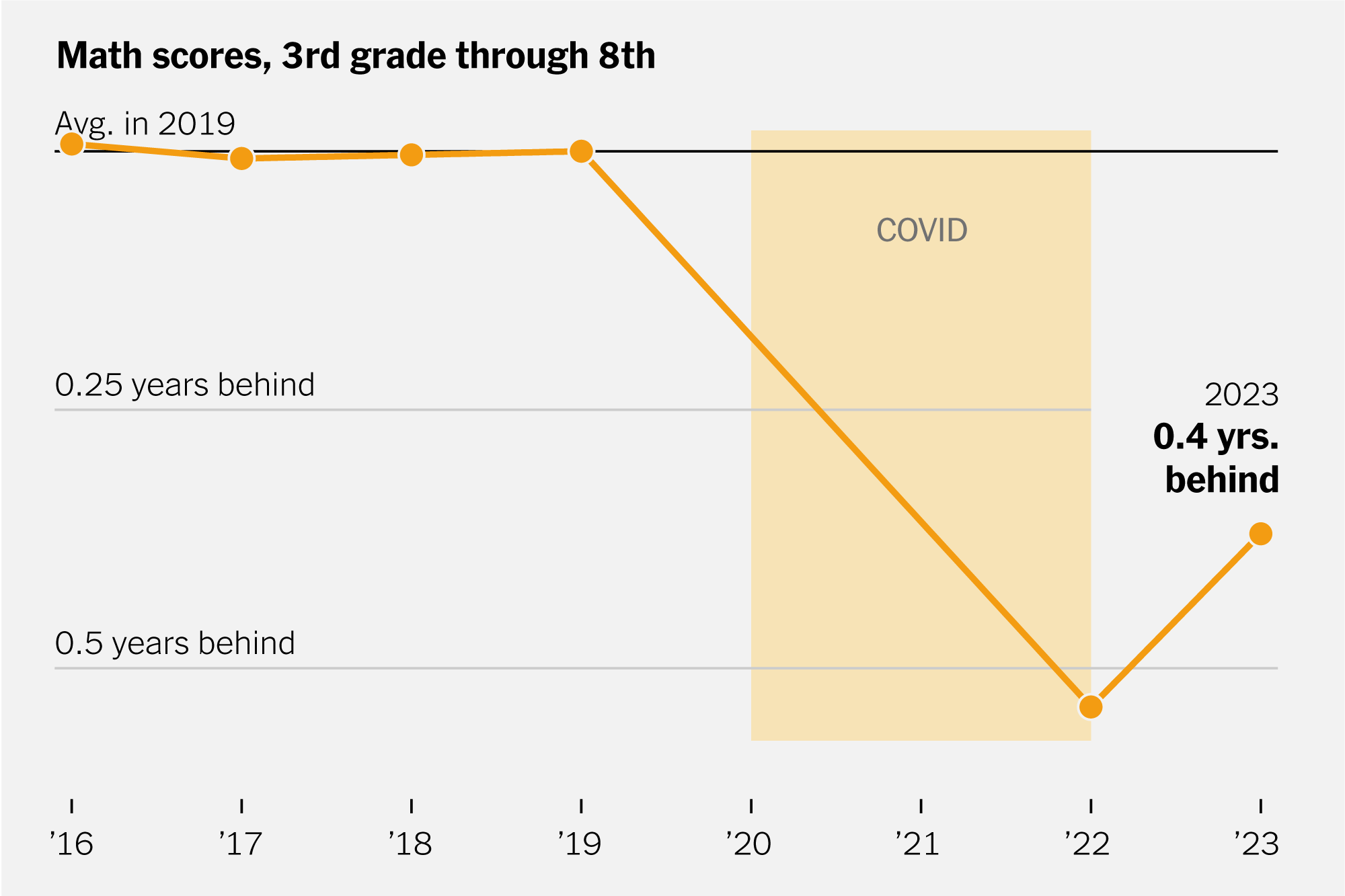
A new global study released today has revealed significant learning gaps in math and reading among students following the COVID-19 pandemic, raising fresh concerns for educators, policymakers, and parents worldwide. The report, based on standardized assessments across dozens of countries, underscores how school closures and remote learning disruptions have left many students struggling to keep pace with their peers.
According to the study, younger learners and students from under-resourced communities have been disproportionately affected, showing the largest declines in basic literacy and numeracy skills. While some high-income nations managed to mitigate learning losses through digital platforms and targeted interventions, gaps remain widespread, especially in developing countries.
Experts warn that if these learning deficits are not addressed quickly, they could have long-term consequences on academic achievement, workforce readiness, and economic mobility. “The pandemic’s impact on education is deeper than we initially thought,” said a leading education researcher. “Math and reading skills form the foundation for future learning, and delays now can translate into persistent challenges later.”
The report also highlights the uneven recovery among students, with remote learning access, parental support, and school resources playing critical roles in outcomes. Countries that invested in online learning tools, teacher training, and remedial programs have reported smaller declines, while regions with limited digital infrastructure continue to struggle.
In response, education authorities worldwide are exploring a variety of strategies to close the gaps. These include accelerated learning programs, tutoring initiatives, revised curricula, and extended school hours. Policymakers are also emphasizing the importance of teacher support, mental health services, and equitable access to learning materials to ensure all students can catch up.
The findings of the study are a stark reminder of the pandemic’s lasting impact on education systems. While progress has been made in reopening schools and resuming normal instruction, experts stress that urgent action is needed to prevent a generational learning loss.
As nations confront these post-pandemic challenges, the focus is shifting toward building resilient, inclusive, and technology-enabled education systems that can withstand future disruptions and provide students with the skills they need to succeed in a rapidly changing world.