
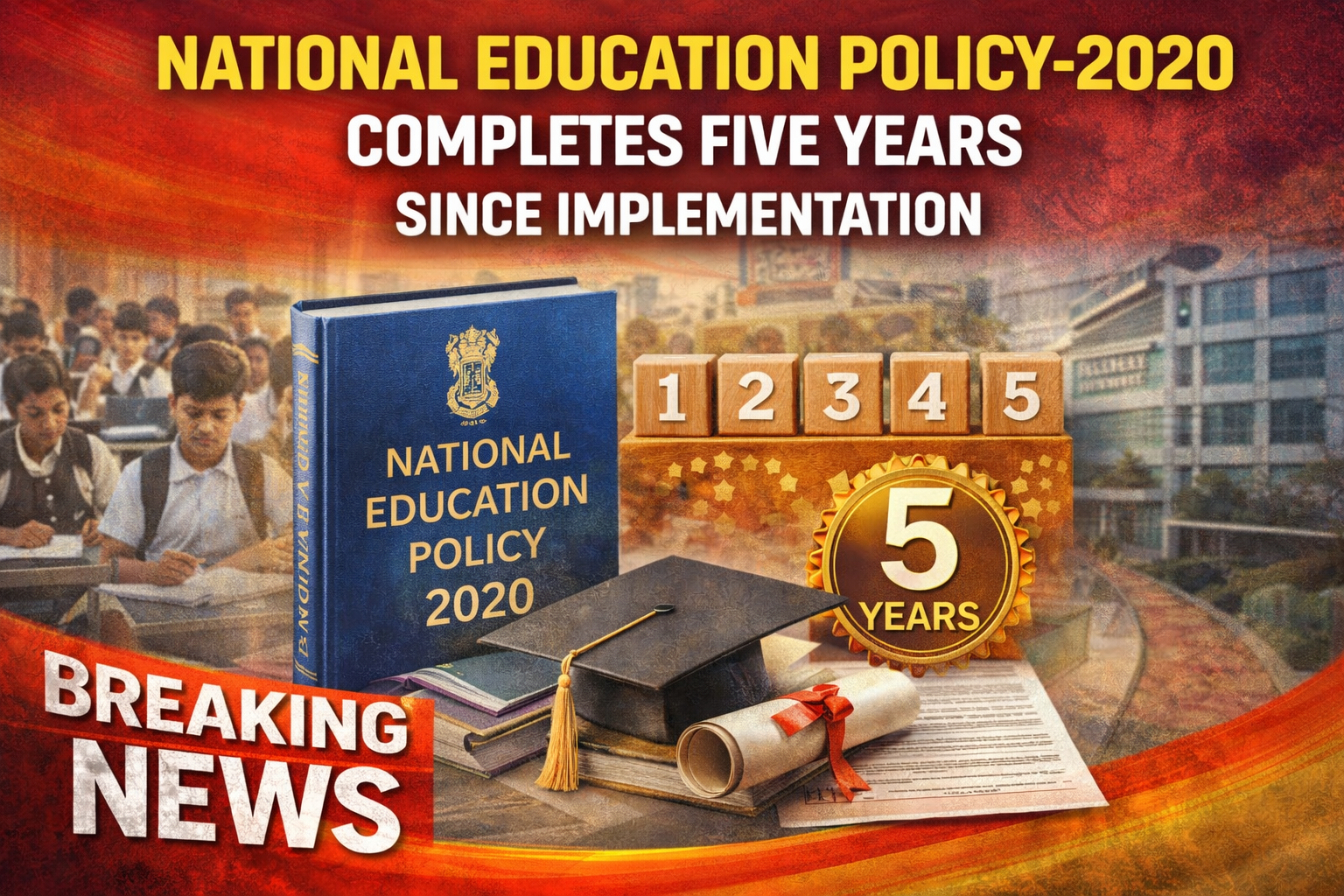
The National Education Policy (NEP) 2020 has completed five years since its implementation, marking a significant milestone in India’s education reform journey. Introduced with the aim of overhauling the decades-old education system, NEP 2020 sought to make learning more holistic, flexible, multidisciplinary, and aligned with global standards. Five years on, the policy’s impact is visible across schools, higher education institutions, and skill-development frameworks, though challenges remain.
One of the most notable changes under NEP 2020 has been the restructuring of school education into the 5+3+3+4 curricular framework, replacing the traditional 10+2 system. This shift emphasized early childhood care and education, foundational literacy, and numeracy, which experts say are crucial for long-term learning outcomes. Several states have reported improved enrollment at the pre-primary level and greater focus on experiential learning in classrooms.
In higher education, NEP 2020 introduced multiple entry and exit options, academic bank of credits (ABC), and greater emphasis on multidisciplinary education. Universities and colleges across the country have gradually adopted flexible degree structures, allowing students to pause and resume education without losing academic progress. The policy also encouraged the establishment of new institutions and the transformation of colleges into autonomous, degree-granting bodies.
Another major focus area has been language and inclusivity. The promotion of mother tongue or regional language as the medium of instruction at the foundational level has been welcomed by many educators, though its implementation has varied across states. At the same time, digital education received a major push, especially after the pandemic, with platforms like DIKSHA and virtual learning initiatives expanding access to educational resources.
However, five years into implementation, experts point out that uneven execution, funding constraints, and capacity gaps continue to pose challenges. Teacher training, infrastructure development, and coordination between the Centre and states remain critical to fully realizing the policy’s vision.
As NEP 2020 completes five years, policymakers and educationists agree that the reform has laid a strong foundation for long-term transformation. The next phase, they say, will be crucial in translating policy intent into consistent, measurable outcomes on the ground. With education playing a central role in India’s demographic and economic future, the evolution of NEP 2020 will remain closely watched in the years ahead.