
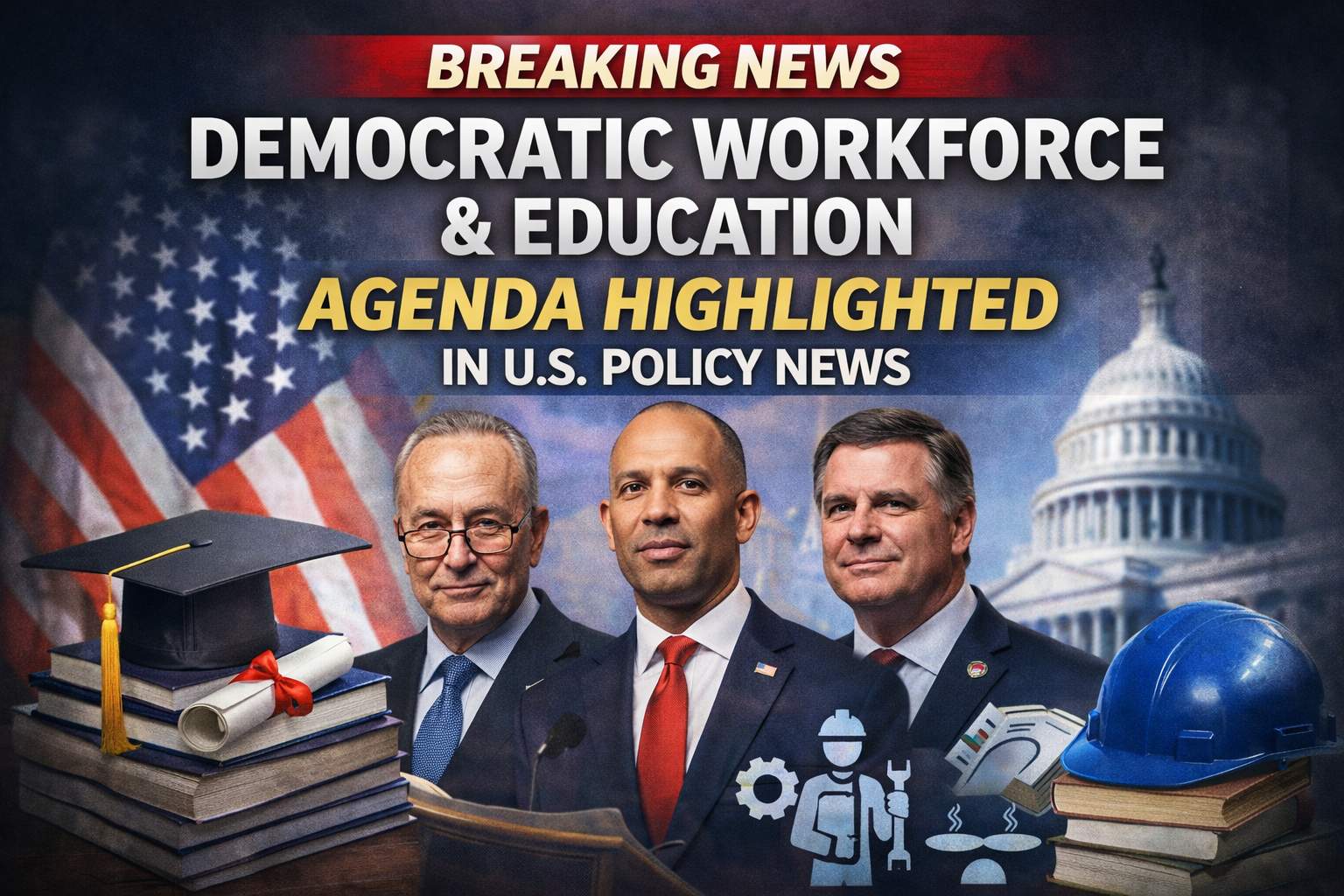
Washington, D.C. — A newly released workforce and education agenda from Democratic lawmakers is drawing significant attention across U.S. policy circles, focusing on strengthening the nation’s education system and connecting it more directly with career pathways and future job markets. The New Dem Workforce & Education Working Group unveiled the plan last week, highlighting a broad strategy to support students, workers, and educators amid evolving economic demands.
The agenda, spearheaded by Working Group Chair Frank Mrvan (D-IN) together with co-chairs from the Education Task Force and Apprenticeship & Training Task Force, outlines a comprehensive approach to education that bridges traditional academics with workforce readiness. The plan emphasizes expanding access to world-class K-12 education, creating concrete career pathways, and ensuring Americans have robust lifelong learning opportunities to adapt to changing industries and technological advancements.
Key elements of the agenda focus on ensuring that students do not just graduate with diplomas, but also with tangible skills that align with local and national labor market needs. This includes strengthening career and technical education (CTE) programs, promoting apprenticeships and on-the-job training, and enhancing partnerships between schools and employers. Lawmakers hope these steps will help close persistent gaps between education and employment outcomes.
The proposal also underscores the importance of supporting educators themselves, calling for investments in professional development, apprenticeships for teachers, and new incentives to attract and retain quality educators — a priority underscored by recent higher-education policy research. Researchers point to growing interest among state education leaders in bolstering workforce development and career readiness as top priorities for 2026.
Supporters of the Democratic agenda argue that aligning education systems more closely with workforce needs will strengthen economic competitiveness and improve opportunities for students of all backgrounds. Lawmakers involved in crafting the plan note that such efforts are critical as automation, artificial intelligence, and global economic shifts reshape labor demands.
Critics, however, caution that the proposal will require significant funding commitments and careful coordination across federal, state, and local levels to be successful. As debate continues in Washington this week, policy analysts will be watching closely to see how the agenda influences federal spending priorities and legislative proposals in the coming months.