
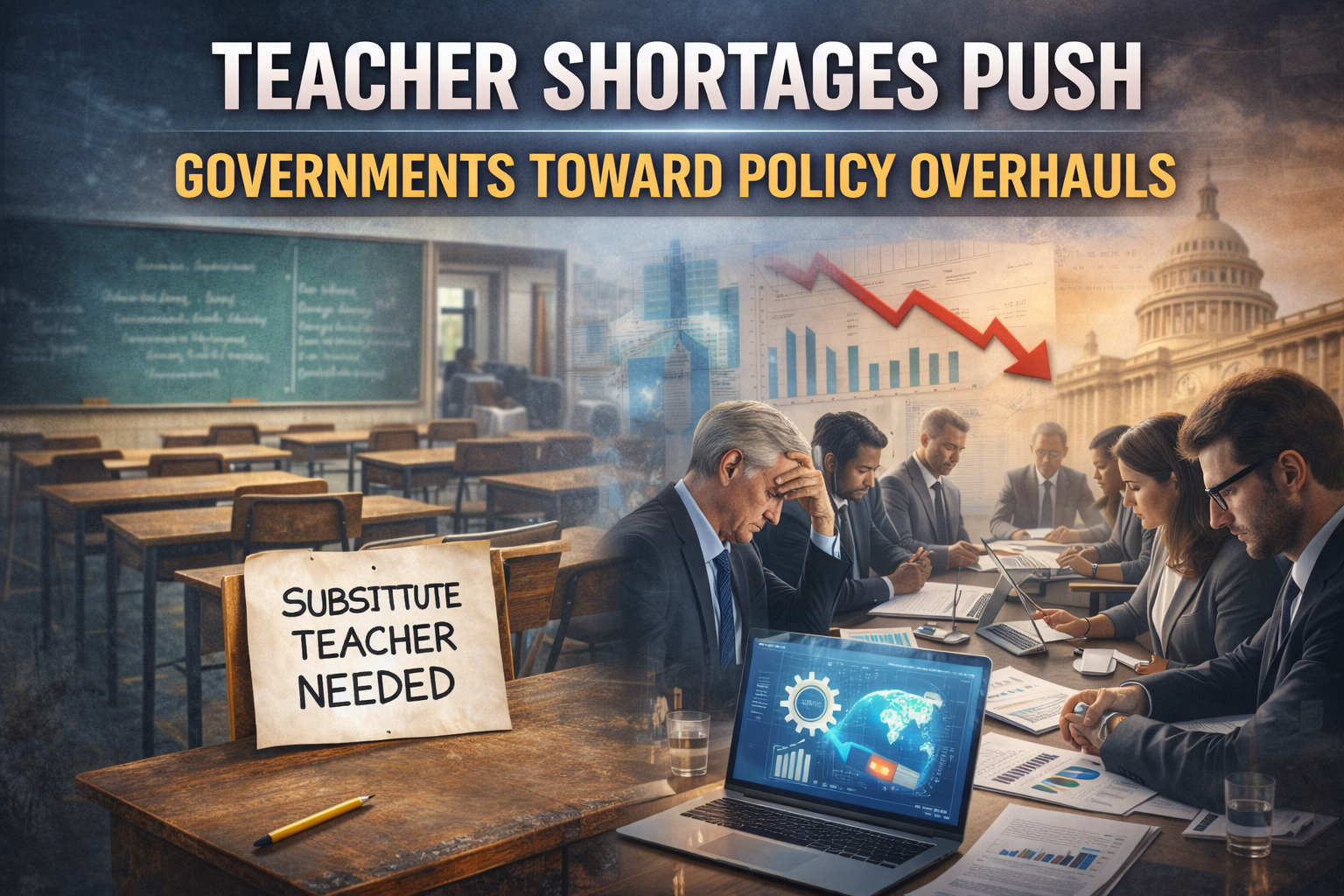
Governments across the world are moving toward major education policy overhauls as worsening teacher shortages threaten the stability and quality of schooling systems, according to education officials, unions, and policy analysts.
New figures released by national education departments and international agencies show that millions of teaching positions remain unfilled, particularly in public schools, rural areas, and high-demand subjects such as mathematics, science, and special education. The shortages, which intensified during the COVID-19 pandemic, have continued to grow due to burnout, early retirements, and declining interest in the profession.
Education ministries in several countries are now accelerating reforms aimed at teacher recruitment, retention, and training. Proposed measures include higher starting salaries, reduced workloads, fast-track certification programs, and expanded mental health support for educators.
“The scale of the shortage has reached a critical point,” said an education policy advisor involved in government consultations. “Without urgent action, learning outcomes will continue to decline.”
Low pay and heavy administrative burdens remain the primary reasons teachers are leaving the profession, according to union surveys. Many educators report increased classroom sizes, limited support staff, and pressure to manage learning gaps caused by earlier school disruptions.
In response, some governments are relaxing qualification requirements to allow professionals from other fields to enter classrooms more quickly. While officials argue this could ease immediate staffing pressures, education experts warn that lowering standards without proper training risks undermining teaching quality.
The crisis is especially severe in low- and middle-income countries, where limited funding and infrastructure challenges already strain education systems. However, advanced economies are also struggling. Several regions in Europe and North America have reported record vacancy rates, forcing schools to rely on substitute teachers or shift to blended learning models.
Policy analysts note that teacher shortages are closely linked to broader workforce trends. As job opportunities expand in technology and private-sector roles, fewer graduates are choosing teaching as a long-term career. This has prompted governments to reconsider how the profession is valued and supported.
International organizations, including UNESCO, have urged countries to treat teacher shortages as a national priority, warning that failure to act could deepen inequality and slow economic growth.
As policy debates intensify, education leaders agree on one point: sustainable reform will require long-term investment, improved working conditions, and renewed trust in the teaching profession to prevent further erosion of education systems worldwide.