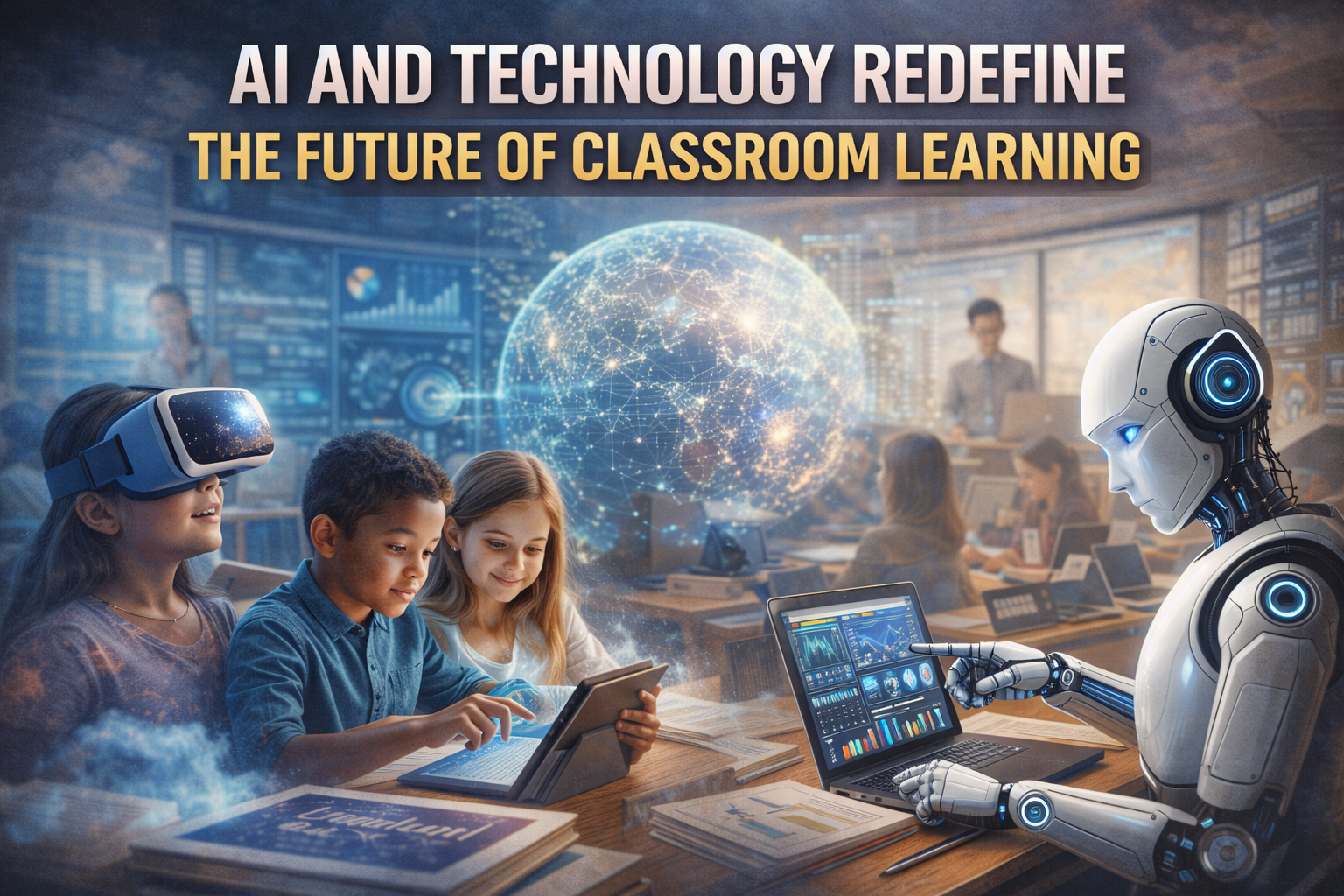
Classrooms worldwide are undergoing a profound transformation as artificial intelligence (AI) and emerging technologies reshape how students learn, teachers instruct, and schools operate. Education experts say this shift is not just about digitizing lessons but fundamentally rethinking learning strategies to meet the needs of the 21st-century student.
AI-powered tools are increasingly being integrated into educational platforms to provide personalized instruction, real-time feedback, and predictive analytics for student performance. Virtual reality (VR) and augmented reality (AR) are creating immersive learning experiences, allowing students to explore historical events, scientific concepts, and complex problem-solving scenarios in ways previously unimaginable.
“Technology is no longer a supplementary tool—it is becoming central to how we teach and learn,” said a leading education technologist. “AI and adaptive platforms allow teachers to focus on critical thinking, creativity, and mentorship while technology handles repetitive tasks and personalized learning plans.”
Schools and universities are adopting hybrid teaching models that combine traditional in-person instruction with digital learning environments. These models provide flexibility for students, including remote learners, and enable educators to monitor progress and adjust lessons based on data-driven insights.
However, experts warn that the adoption of AI and technology must be accompanied by strong policy frameworks to ensure equity and accessibility. Not all students have equal access to high-speed internet, modern devices, or digital literacy skills, raising concerns about widening educational disparities.
Teacher training remains a critical component of successful implementation. Schools are investing in professional development programs to help educators integrate AI tools into the curriculum effectively while maintaining high-quality human interaction.
Beyond the classroom, AI is also supporting administrative efficiency by automating grading, attendance tracking, and student performance reporting. This allows institutions to reallocate resources toward student support services and innovation in pedagogy.
As technology continues to evolve, experts predict that the next decade will see AI-driven adaptive learning, data-informed curriculum design, and increasingly immersive educational experiences become standard in classrooms worldwide. The challenge for policymakers and educators will be balancing technological advancement with inclusivity, ethical standards, and meaningful human engagement.
The integration of AI and emerging technologies represents a pivotal moment in education, offering opportunities to personalize learning, enhance engagement, and prepare students for a rapidly changing global workforce.