
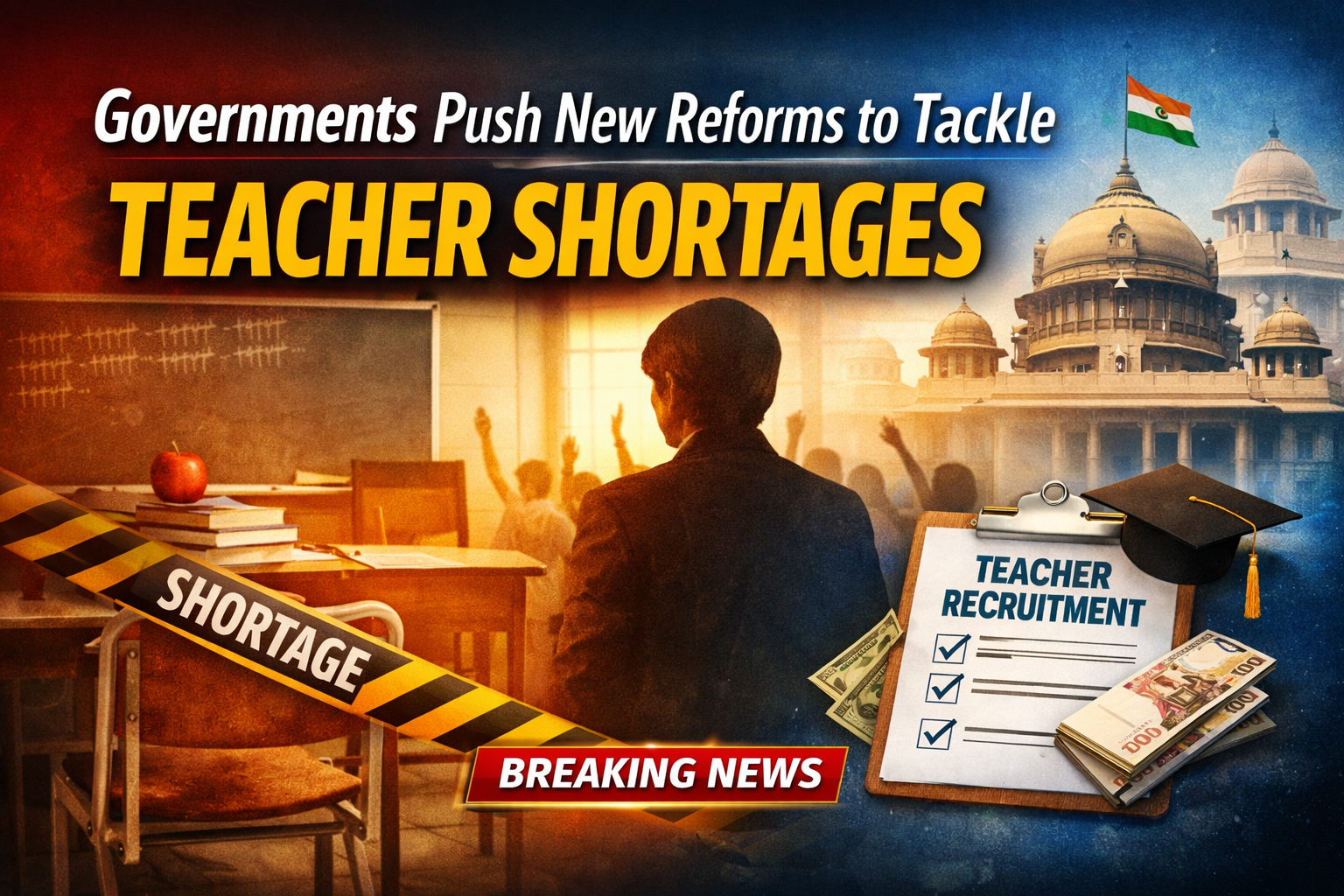
Governments across several countries are rolling out new education reforms as teacher shortages reach critical levels, raising concerns about classroom quality, student outcomes, and long-term workforce development.
Education ministries report that schools are struggling to fill vacancies in core subjects such as mathematics, science, special education, and early childhood learning. Rural and low-income regions are being hit the hardest, with some schools operating for months with substitute teachers or merged classrooms.
Officials say the shortage is being driven by a combination of factors, including rising workloads, stagnant wages, burnout following the pandemic, and declining enrollment in teacher training programs. In response, policymakers are now accelerating reforms aimed at attracting, retaining, and supporting educators.
Several governments have announced fast-track certification programs designed to bring professionals from other industries into teaching. These initiatives focus on simplifying licensing requirements while maintaining classroom standards through mentorship and supervised training. At the same time, financial incentives such as signing bonuses, student loan forgiveness, and housing allowances are being expanded to make teaching more competitive with private-sector jobs.
Teacher retention has also become a central focus of the reforms. New policies emphasize reduced administrative burdens, increased planning time, and expanded access to mental health support. Some education departments are piloting flexible schedules and hybrid teaching models, particularly for secondary and vocational education.
Technology is playing a growing role as well. Governments are investing in digital tools to assist lesson planning, assessment, and student tracking, allowing teachers to spend more time on instruction rather than paperwork. However, officials stress that technology is intended to support educators, not replace them.
Education experts warn that reforms must be implemented carefully. “Short-term fixes will not solve a long-term structural problem,” said one policy analyst. “Sustainable change requires competitive pay, professional respect, and clear career pathways.”
Parents’ groups and school leaders have broadly welcomed the reforms but say results must be felt quickly in classrooms. With enrollment numbers rising in many regions, pressure is mounting on governments to turn policy announcements into measurable improvements.
As the new academic year approaches in several countries, education systems face a critical test: whether these reforms can stabilize the teaching workforce and restore confidence in public education.