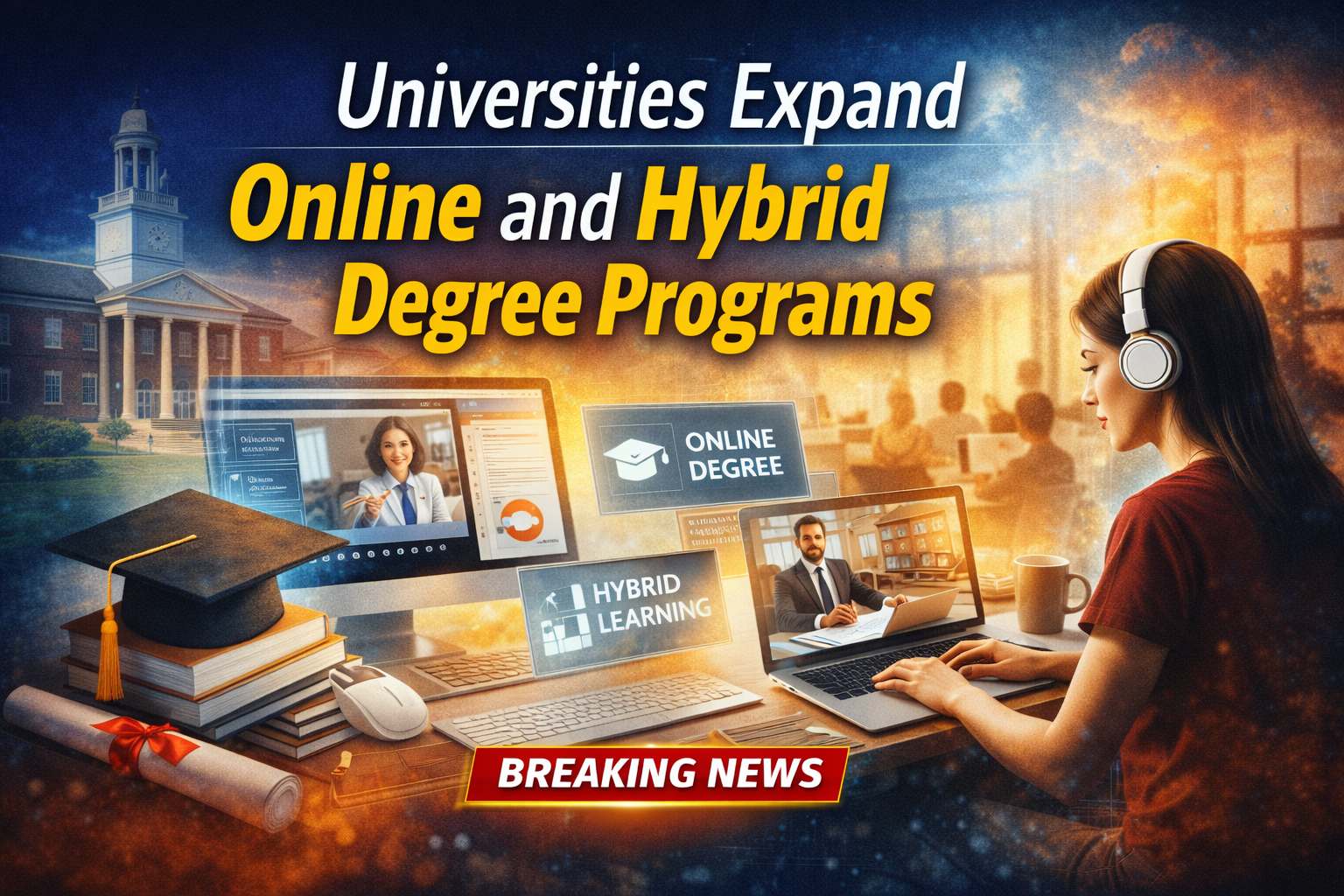
Universities around the world are rapidly expanding online and hybrid degree programs as student demand for flexible learning options continues to rise. Education leaders say the shift reflects long-term changes in how learners balance academics with work, family responsibilities, and financial pressures.
Institutions in North America, Europe, Asia, and emerging markets have announced new online undergraduate and postgraduate offerings across disciplines such as business, computer science, healthcare, and education. Hybrid models, which combine in-person instruction with remote learning, are also gaining momentum as universities seek to broaden access without sacrificing academic rigor.
University administrators note that enrollment trends have played a key role in accelerating the expansion. Adult learners, international students, and working professionals are increasingly choosing programs that allow them to study remotely while maintaining employment. Hybrid degrees are also helping institutions attract students who prefer campus engagement but value flexibility.
Technology investments have become central to this transition. Universities are upgrading digital learning platforms, virtual laboratories, and interactive assessment tools to ensure online students receive comparable academic support to their on-campus peers. Faculty training programs are also being expanded to help instructors adapt teaching methods for blended environments.
Accreditation bodies and education regulators are responding to the growth by updating quality standards for online and hybrid education. Several agencies have introduced stricter requirements around student engagement, learning outcomes, and transparency, aiming to ensure credibility and public trust in digital degrees.
Despite the growth, challenges remain. Faculty groups have raised concerns about workload increases and the need for ongoing institutional support. Student advocates also warn that unequal access to high-speed internet and digital devices could widen existing education gaps if not addressed through targeted funding and policy measures.
“Online and hybrid programs are no longer temporary solutions,” said a higher education policy expert. “They are becoming a permanent part of the university ecosystem, and institutions must invest accordingly.”
As competition intensifies, universities are expected to continue refining program design, pricing models, and student support services. The expansion of online and hybrid degrees signals a broader transformation in higher education one that prioritizes flexibility, accessibility, and adaptability in a changing global landscape.