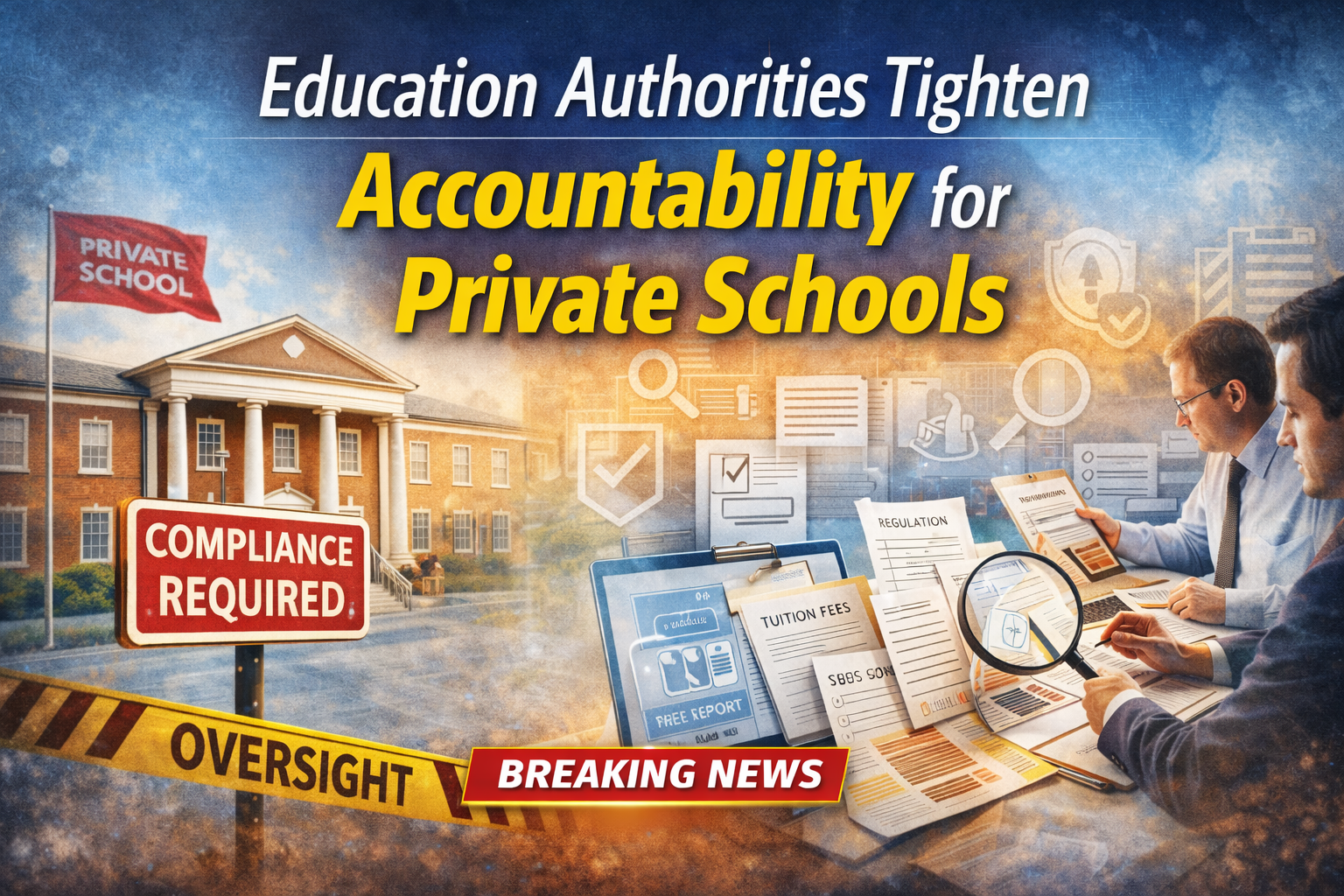
Education authorities are tightening accountability measures for private schools as concerns grow over transparency, fee regulation, learning outcomes, and compliance with national education standards.
Regulators in several regions have announced stricter monitoring frameworks aimed at ensuring private institutions meet academic, financial, and administrative requirements. Officials say the move follows repeated complaints from parents and findings from audits that revealed gaps in reporting, teacher qualifications, and student assessment practices.
Under the new measures, private schools will be required to submit detailed disclosures on fee structures, teacher credentials, student enrollment data, and learning outcomes. Authorities are also expanding the use of inspections and digital reporting systems to track compliance more closely throughout the academic year.
Education departments stress that the reforms are not intended to restrict private education but to protect students and families. “Private schools play an important role in the education ecosystem,” an education official said. “However, accountability and transparency are essential to maintain trust and ensure quality.”
In some regions, penalties for non-compliance have been increased. Schools that fail to meet reporting deadlines or violate regulations may face fines, loss of recognition, or restrictions on new admissions. Authorities are also reviewing complaints mechanisms to give parents clearer channels for raising concerns.
The tightening of oversight comes amid rapid growth in private schooling, particularly in urban areas. As demand has risen, regulators say enforcement has not always kept pace. Officials believe stronger accountability will help prevent unfair practices and improve consistency across institutions.
Private school associations have offered mixed reactions. While some support clearer rules and standardized oversight, others warn that excessive regulation could increase operational costs and reduce flexibility. They argue that collaboration between regulators and schools will be key to successful implementation.
Education experts note that accountability reforms must balance enforcement with support. “Monitoring alone is not enough,” said one policy analyst. “Authorities should also provide guidance to help schools improve quality rather than simply penalize them.”
As implementation begins, parents and educators will be watching closely to see whether the new measures lead to better transparency, improved teaching standards, and stronger protection of student interests. The reforms signal a broader shift toward tighter governance in private education as systems adapt to rising enrollment and public scrutiny.