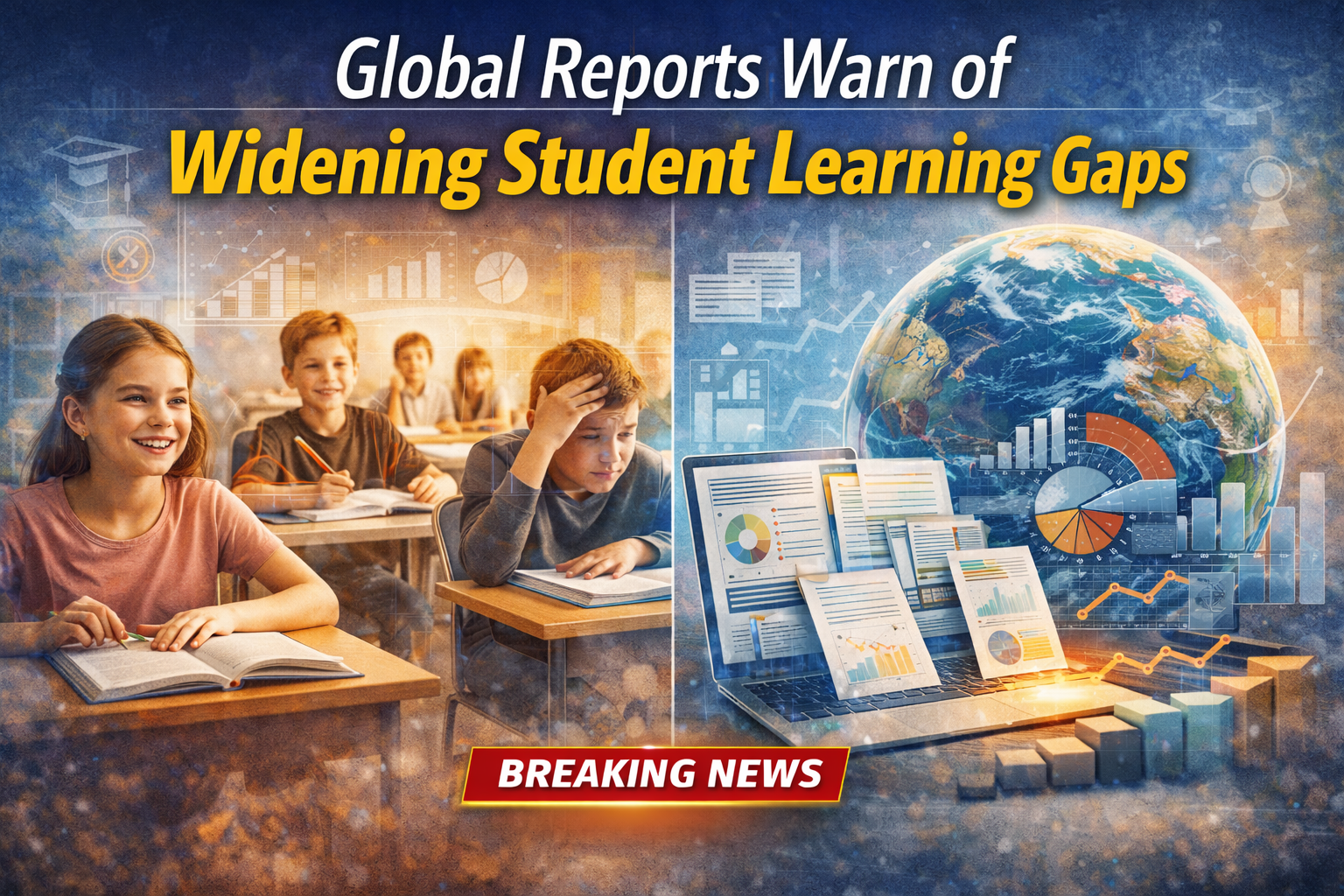
New global reports are raising alarms about widening learning gaps among students, highlighting the urgent need for policy interventions, educational support, and targeted reforms. Experts warn that inequalities in access to quality instruction, digital tools, and learning resources are contributing to significant disparities in academic outcomes.
International agencies, including UNESCO and the OECD, point out that students from low-income households, rural areas, and marginalized communities are most affected. The reports indicate that disruptions caused by the pandemic, combined with uneven adoption of digital learning, have exacerbated pre-existing challenges in foundational literacy and numeracy.
Data shows that while some regions have recovered quickly, others lag far behind, particularly in basic reading and math skills. Analysts note that the gaps are not just a short-term issue but could have long-term social and economic consequences if unaddressed.
Governments and school systems are responding by increasing support programs for struggling learners. Initiatives include targeted tutoring, extended school hours, remedial classes, and access to online learning platforms. Education technology is being deployed to track student progress, identify at-risk learners, and personalize learning interventions.
Policy experts emphasize the importance of teacher training and curriculum adaptation to ensure equitable learning outcomes. “Bridging the gap requires a systemic approach,” said one international education analyst. “It is not enough to provide resources; we must also ensure they are effectively utilized and reach the students who need them most.”
Parents and advocacy groups are calling for greater transparency and regular assessment of learning progress to ensure that interventions are effective. Early identification of gaps and continuous monitoring are considered crucial to prevent long-term educational setbacks.
The reports serve as a reminder that global education recovery remains uneven. Without coordinated action, the widening learning gaps threaten to reinforce cycles of inequality and limit opportunities for future generations.
Education authorities, NGOs, and international agencies are now emphasizing collaboration, data-driven interventions, and inclusive policies to address disparities. As governments mobilize resources, the focus remains on delivering quality education to all students, regardless of socioeconomic background.