
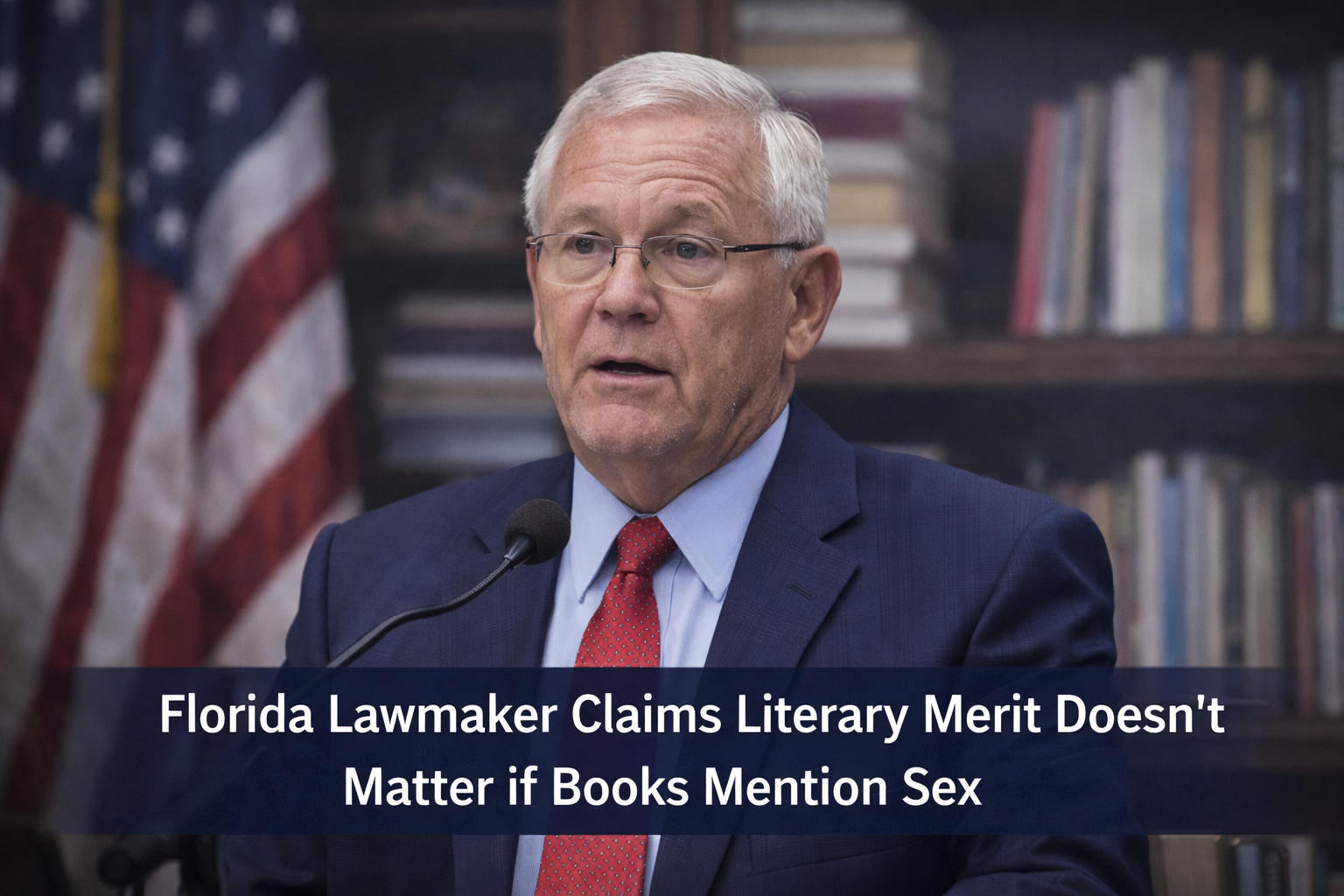
A Florida lawmaker has sparked controversy by asserting that the literary value of books is irrelevant if they include sexual content. The statement comes amid a growing national debate over book bans, school library restrictions, and the definition of inappropriate material for students.
During a recent legislative session, the lawmaker emphasized that books discussing sexual themes should face scrutiny, regardless of awards, critical acclaim, or educational significance. “It doesn’t matter if a book has literary merit,” the official said. “If it contains sexual content, it shouldn’t be available in schools or public libraries for children and teens.”
This remark has ignited responses from educators, librarians, and free-speech advocates, who argue that literary value and context should always be considered. Experts warn that restricting books solely based on sexual references could limit access to important works of literature, harm student learning, and undermine critical thinking.
Several school districts in Florida have already implemented stricter review policies, removing certain books from classrooms and libraries. Supporters of the move say it protects children from exposure to explicit material, while critics describe it as censorship that could erode intellectual freedom. National organizations, including the American Library Association (ALA), have condemned blanket bans, stating that context, age-appropriateness, and educational value are critical factors.
The debate comes amid a larger national conversation about parental rights, curriculum oversight, and the role of government in education. Lawmakers across multiple states are introducing bills targeting books that mention sexual content, often framing the discussion as a moral imperative, while opponents argue it stifles creativity, diversity, and learning opportunities.
Florida’s approach is now being watched closely by education leaders, librarians, and policymakers nationwide. Advocates for student rights emphasize that students benefit from access to a broad range of literature, including books that responsibly address sexuality, relationships, and identity.
As the controversy unfolds, educators are urging schools, parents, and communities to engage in dialogue, balance safety concerns with educational value, and ensure that book policies are thoughtful rather than reactionary. The discussion over literary merit versus sexual content is expected to continue as lawmakers debate new education policies in the coming months.