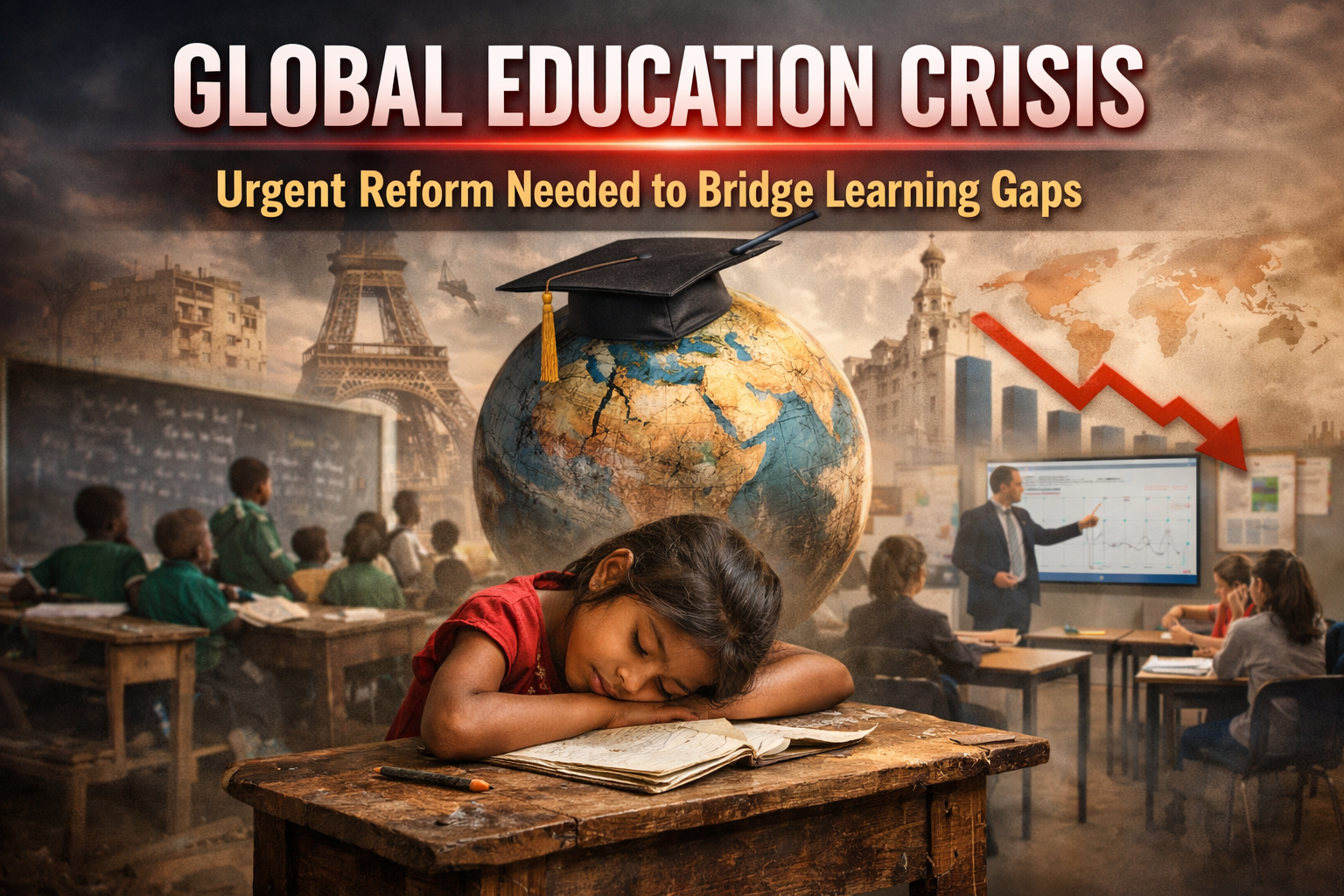
Education systems across the world are facing mounting pressure to reform as widening learning gaps threaten long-term social and economic stability, according to educators, policymakers, and international agencies monitoring post-pandemic recovery.
New assessments released this week indicate that millions of students remain significantly behind expected learning levels, particularly in foundational literacy, numeracy, and digital skills. While classrooms have largely reopened, experts warn that the disruption caused by COVID-19 has exposed deeper structural weaknesses in global education systems—weaknesses that cannot be addressed through short-term fixes alone.
International organizations, including UNESCO and the World Bank, have emphasized that learning losses are most severe in low- and middle-income countries, where access to technology, trained teachers, and reliable infrastructure remains uneven. However, high-income nations are not immune. Several advanced economies are also reporting declines in student performance, rising dropout rates, and increased pressure on teachers.
“The crisis is no longer just about lost school days,” said one senior education policy advisor. “It’s about outdated systems struggling to meet the needs of modern learners in a rapidly changing world.”
Governments are now accelerating discussions around curriculum reform, teacher training, and the integration of technology, including artificial intelligence, into classrooms. While AI-powered tools are being promoted as a way to personalize learning and support teachers, experts caution that technology alone cannot close learning gaps without strong policy frameworks and equitable access.
Teacher shortages remain another critical concern. In many regions, educators are leaving the profession due to burnout, low pay, and limited support, further straining already fragile systems. Education unions and advocacy groups are calling for urgent investment in teacher recruitment, mental health support, and professional development.
The push for reform is also being driven by economic realities. Analysts warn that persistent learning gaps could reduce future workforce productivity and widen inequality if left unaddressed. As a result, education has moved higher on the political agenda in several countries, with leaders framing reform as a national and global priority.
As debates continue, one message is clear: without coordinated, long-term action, the learning crisis risks becoming a permanent setback for an entire generation.