
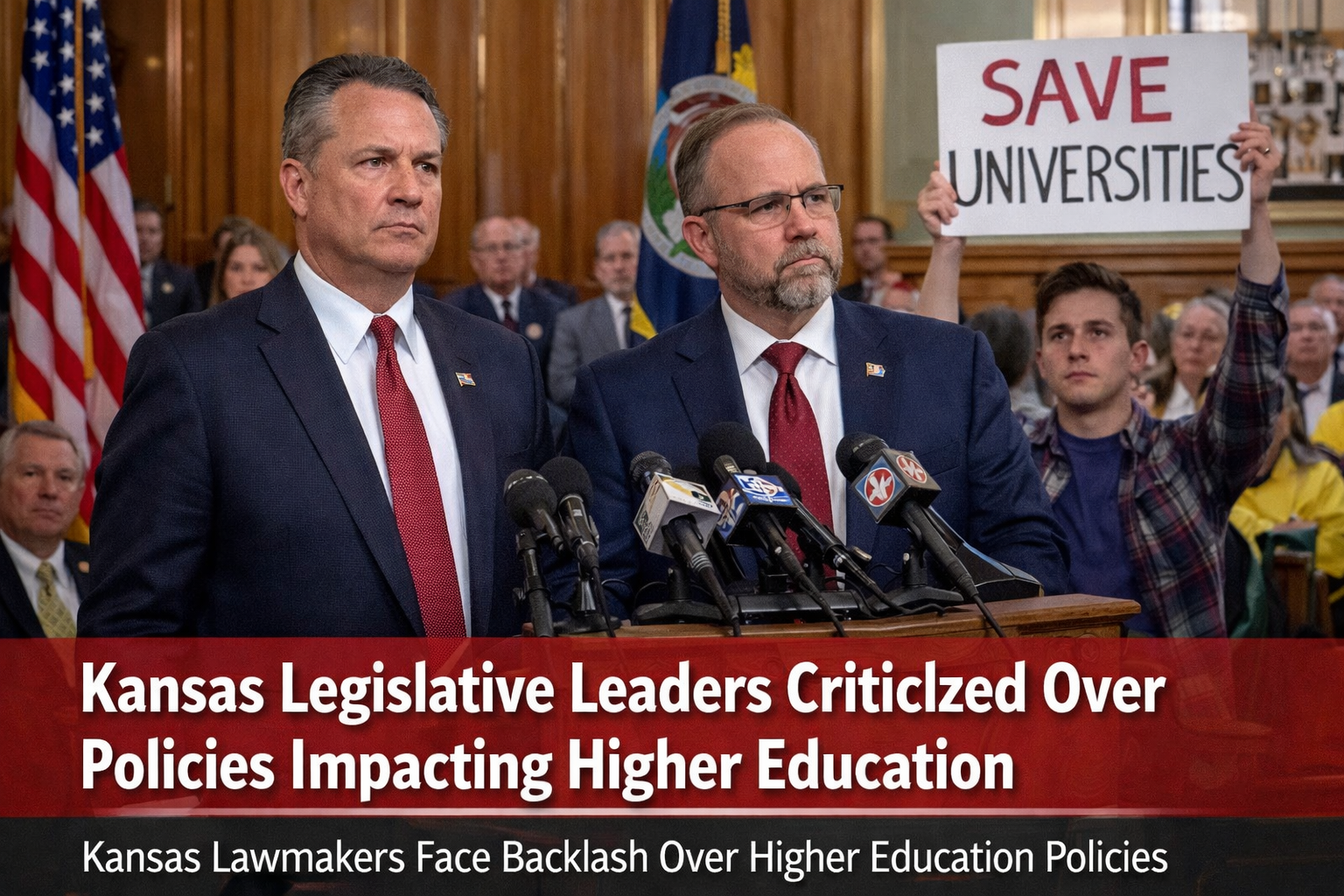
Topeka, Kansas – January 12, 2026 — Kansas legislative leadership has come under intensified scrutiny from educators, university officials and political observers as recent actions by Republican lawmakers signal a shift in state policy that could significantly affect public higher education institutions across the state.
At the center of the controversy is the Kansas Legislature’s decision to engage a controversial consultant, former Emporia State University president Ken Hush, to advise on higher education budgeting and restructuring efforts. Critics argue the move mirrors an effort to weaken the autonomy and strength of state universities rather than to support academic excellence or student success.
The debate escalated after legislative leaders, including House Speaker Dan Hawkins and Senate President Ty Masterson, defended the decision to hire Hush, despite his contentious tenure at Emporia State, where faculty terminations and student outflows occurred under his leadership. Opponents describe the hiring as a strategic attempt by legislative leadership to exert influence over universities’ internal operations, potentially undermining institutional stability.
Another flashpoint is pending legislation that would impose financial penalties on public colleges and universities for actions tied to diversity, equity and inclusion (DEI) policies. A recently revised bill would levy fines of up to $10,000 per violation against public institutions that incorporate DEI criteria in admissions or hiring practices—an initiative the bill’s proponents call a protection of free speech and academic neutrality, even as critics warn it could erode campus diversity and academic freedom.
These developments come amid broader legislative activity this session, with lawmakers also weighing proposals related to accreditation standards and compliance oversight, reflecting a heightened legislative focus on state control over public universities.
Supporters of the measures argue they enhance accountability and fiscal responsibility for higher education systems, while critics—including some university administrators and advocacy groups—contend that these efforts risk politicizing academic institutions and could lead to reduced funding, declining enrollment, and weakened academic reputation for Kansas’s public universities.
As the 2026 legislative session continues, higher education stakeholders in Kansas are watching closely, anticipating final votes on key bills that could reshape the future of college governance, campus policy, and the academic environment for thousands of students and educators statewide.